
This weekend, the gladiatorial warriors of the Six Nations will step into uncharted territory.
For the first time, the 2026 Championship has begun with three straight weekends of matches, instead of the usual back-to-back fixtures and then a break.
Overall, this year’s tournament will be played over a total of six weeks and not seven, raising the physical demands on the players to new heights. The Six Nations was already brutal.
Now, it is even more so, with those who take to the field given one fewer week to recover. It comes at a time when World Rugby – the game’s governing body – argue that player welfare is their ‘No 1 priority’. At the same time, it is undoubtedly true that more than ever is being asked of the sport’s biggest names.
Under World Rugby welfare guidelines, England’s top stars are supposed to be limited to 30 games a season. Captain Maro Itoje and Tommy Freeman exceeded that in 2025-26. The pair were given five weeks off when returning from last summer’s Lions tour of Australia, but Freeman this week admitted the physical and mental toll of a long season was huge.
‘I struggled without realising it,’ said the Northampton back, who starts for England against Ireland on Saturday.

The physical toll of the Six Nations will be even greater than normal for England stars like Tommy Freeman (left), with the competition being played over six weeks rather than seven

Freeman – who exceeded World Rugby’s guidelines of a 30-game limit in 2025-26 – recently admitted to struggling with the mental impact of having such an intense season
‘I had the five weeks off, the body felt good, but my mental state wasn’t in the best spot. It’s a lot of rugby and then I could probably have managed my off time better.
‘Without realising it, I think I was tired. My body felt like I was OK to go and I was saying to coaches: “Yeah I’m fine, I’m fine.” I just think mentally it was a bit of a struggle.’
And herein lies rugby’s issue. The players always want to play. Over the course of the 2026 Six Nations so far, I have asked many of them what they make of the new tournament structure and the overwhelming response has been positive. But that does not necessarily tell the full story.
So, why has this happened?
The Six Nations now runs not only northern hemisphere’s top international competition, but the summer and autumn Test windows which have amalgamated for the new, biannual Nations Championship competition.
In simple terms, the spare Test week created by shortening the length of the Six Nations has been transferred to the autumn.
The reality is the demands on top international players remain as high ever, if not more so, with the onus on their club employers to ensure they are rested. The £200million Professional Game Partnership between the RFU and PREM Rugby allows for England’s stars to be managed co-operatively, though there is no easy answer to ensuring their wellbeing is looked after.

Jamie Ritchie (left) was one of three Scotland players who picked up a serious injury in their Calcutta Cup win over England

Ritchie, pictured at full-time on Saturday, had to leave the Murrayfield pitch on crutches after breaking a bone in his leg
Professor Willie Stewart of the University of Glasgow is among those concerned that shortening the length of the Six Nations will lead to an increased risk of injury. Hundreds of former players remain locked in a legal battle with World Rugby, the RFU and the Welsh Rugby Union over the impact of head injuries and their development of neurological diseases such as early onset dementia.
‘International rugby is a brutal, physical contact game,’ Professor Stewart told Daily Mail Sport. ‘It’s attritional. There is a high risk of injury. It’s so hard to ask the players to do that week in, week out. Knocking a week off takes a week away from the players in terms of recovery.
‘It’s incredible. I don’t understand it. We’re not going to be seeing the best players in the Six Nations playing at the top of their game week in, week out.
‘We’re going to see the players who are left standing. Unfortunately, the injury rates are going to go up and careers are going to end sooner than they should have. I just cannot conceive why they think taking one of the break weeks out of the Six Nations is a sensible idea for player welfare.’
In their Calcutta Cup defeat of England, Scotland lost three players to serious injury in Jack Dempsey, Jamie Ritchie and Jamie Dobie. Ireland went into this Six Nations already hit hard by fitness absences.
Playing three straight matches in as many weekends undoubtedly helps the Six Nations build momentum in its storytelling and as such, is popular with broadcasters. Players such as England scrum-half Alex Mitchell and Wales ace Louis Rees-Zammit have said they have no issue with it.
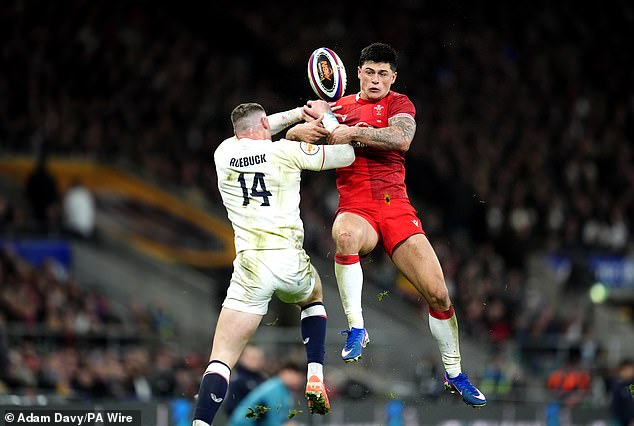
Some players, like Wales star Louis Rees-Zammit (right), say they have no issue with the lack of a break – but do they really know what is in their best interest long-term?

‘I don’t think there is anyone out there acting in the players’ best interests,’ says Alix Popham, the former Wales forward, who is involved in legal action against rugby’s authorities
But the key question is this… Do they know what’s best for them, not only now but in the future?
Alix Popham, the former Wales forward, is one of the ex-players involved in legal action against rugby’s authorities following his early-onset dementia diagnosis.
‘Something has to give,’ he told Daily Mail Sport. ‘Limits on player involvement are no good if they’re ignored and as that’s been happening, I don’t think World Rugby can say player welfare is their No 1 priority. If rugby was serious about this, it would have stopped guys like Freeman from playing in the Lions games last season.
‘The players today are always going to say yes to what’s asked of them and they can’t bring the game into disrepute.
‘I don’t think the player unions are strong enough on this, nor do I think there is anyone out there acting in the players’ best interests.’
After the Scotland loss, Mitchell said: ‘You’d hate to go into a fallow week now and be licking your wounds after a result like that. It’s perfect we’ve got another chance to go at Ireland on Saturday to right some wrongs. I personally feel really good. It is demanding on the body, but I think everyone prefers this set-up of the three and two.
‘With the fallow week, you lose a bit of momentum in the competition. I love the new set-up and everyone’s in a good place.’
The welfare of England’s top players is now looked after by Team England – a body headed up by former prop Joe Marler – who have taken over that role from the Rugby Players’ Association. The RPA continue to have a key role on welfare in English rugby.

The break is popular with some players. England scrum-half Alex Mitchell (centre) said he would ‘hate to go into a fallow week now’ after the loss to Scotland

England captain Maro Itoje (centre), like Freeman, exceeded World Rugby’s recommended limit for games in 2025-26
‘The professional game partnership utilises World Rugby’s recommended position of a maximum of 30 match involvements of any kind to encompass both the physical and mental load of taking part in elite sporting competition,’ the RPA said.
‘The RPA strongly support match limits as a means of protecting those players facing the greatest match load. We believe the limits should evolve over time to reflect the modern game and the scientific understanding that goes with it.’
Players such as Freeman and Itoje were given lengthy off-seasons on the back of overreaching their match limits and they are exceptions to the rule.
We will only know the full impact of the change in the Six Nations scheduling in the coming years, but it has already had an effect. England head coach Steve Borthwick admitted part of the reason behind his team’s changes for Ireland were down to the lack of a rest week.
After being hammered by France, Wales have a six-day turnaround for Scotland and have made four changes for Gregor Townsend’s men as a result. Ireland have made five changes for their trip to Twickenham. Rotation is entirely understandable.
It seems clear that with physical demands increasing, the teams with bigger squad depth, such as France and England, will be able to cope better. Those two, in particular, could put out two or three sides which would be competitive at this level.
On Thursday, England assistant coach and marathon runner Kevin Sinfield – a man who knows a lot about physical endurance – emphasised that Borthwick’s players would be ready for Ireland thanks to the impressive level of support staff the team can call on.
There is no doubt that scientific and medical advances have allowed the modern player to push themselves even further and Sinfield said his team hadn’t changed their normal training week noticeably for Ireland, other than to shorten one session slightly. That said, it doesn’t mean elite athletes should be pushed to the brink.
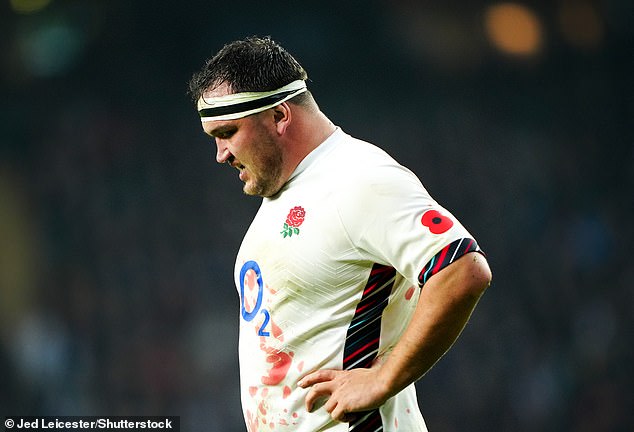
‘Test match rugby is difficult,’ admits England hooker Jamie George. ‘It’s tough. Physically, it’s very, very demanding. One less week obviously puts an extra bit of pressure on’
As usual, it was left to veteran England hooker Jamie George to provide some up front honesty.
‘Test match rugby is difficult. It’s tough. Physically, it’s very, very demanding and one less week obviously puts an extra bit of pressure on,’ he said.
‘But our backroom staff is world class. We will be as well prepared as we possibly can be and if that takes a little bit more recovery time, then so be it.
‘We know how many different players are required and the squad effort that’s required to achieve what you want to in this tournament.’