
It took only six words on Thursday morning for Ukrainian Vladyslav Heraskevych to summarise the conclusion of a saga that ranks among the saddest and most controversial in the history of the Olympic Games.
‘This is price of our dignity,’ he wrote, and with that he accepted his expulsion from the Milan Cortina Games of 2026.
He will depart without the skeleton medal that was within his capabilities here, but with a hero status in his homeland fleshed out by an utter refusal to compromise on his principles. Those being his belief that individual sporting success weighs far less than the value of using his helmet, and his platform as an Olympian, to remind the world of what has happened in the Ukraine since Russia invaded four years ago.
But what of the International Olympic Committee and their reputation? That is looking substantially skinnier today. They unwittingly trapped themselves between the rock of their rules and the hard place of global condemnation; it would seem they chose to bash themselves senseless against the rock.
We should add at this point that they were coherent enough to know a massive backlash was coming. I was told as much by three of their senior staffers on Wednesday, the evening before the 8.30am confirmation that Heraskevych’s accreditation had been stripped, less than an hour before the start of competition.
There are plenty of reasons why the IOC warrant the harsh judgements being thrown in their direction. We will come to those shortly, not the least of which is the backdrop of their softening stance on Russia and the inconsistencies in how they have applied rules on political messaging here in Italy.
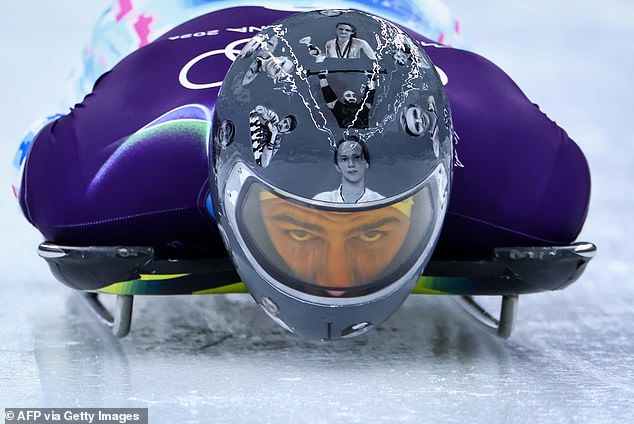
Ukraine’s Vladyslav Heraskevych has been banned from competing in the men’s skeleton at the Winter Olympics for using a helmet that pays tribute to the victims of the Russian invasion
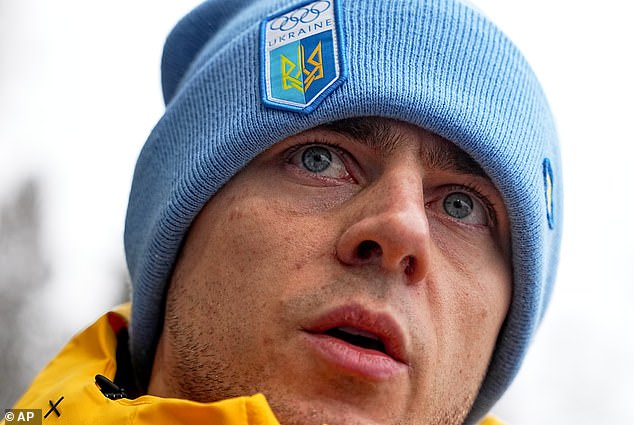
The 27-year-old has fallen foul of rules that allow no leeway whatsoever on political messaging
But there is also nuance to the specifics of this astonishing situation, which ignited on Monday when Heraskevych first made it categorically clear that he would keep wearing a helmet depicting Ukrainian athletes killed since the 2022 invasion of his nation. There have been more than 500 sportsmen and women killed there in that time and 24 of them are commemorated on the helmet he has worn this week.
And yet the IOC have those rules in place for decent reasons.
That much was spelled out to me in an exchange with a senior source on Wednesday night, because if Heraskevych was permitted to make his stand, does it prise open Pandora’s box? Would Israeli athletes adopt their own version? Would one of the four Iranians here have a say? There are currently 59 states said to be engaged in conflict at this very moment and the IOC’s point is that getting the lid back on would be nigh-on impossible once lifted.
True.
Just as it is true that we can poke a hole or two in Heraskevych’s argument that his ‘helmet of remembrance’ was not political. That it was a tribute, no different to an unsanctioned gesture from the figure skater Maxim Naumov, who held up a photo here of his parents after they were killed a plane crash in Washington DC.
We can see through that. Heraskevych’s helmet did not say ‘F*** Russia’, but it was inherently political.
And therein lies the discomfort with the IOC, because much as they wish to talk up their movement as an apolitical front, they themselves are extraordinarily political. It seeps out of every pore and decision. Every act of boot-licking towards agents of global power. Their rules wish away such topics like the plague when it comes to the athletes, but their actions speak louder.
I was at the opening ceremony of the Beijing Winter Olympics of 2022, sat in a tier almost directly beneath Vladimir Putin. After all the usual idealisms were delivered in their addresses about sport uniting a divided world, Putin, their honoured guest, rolled his tanks over the Ukrainian border just days later. Ahead of those same Games, I spoke to Uyghur Muslims about what they alleged to be genocide on their population in China, whose president Xi Jinping was also at the ceremony.
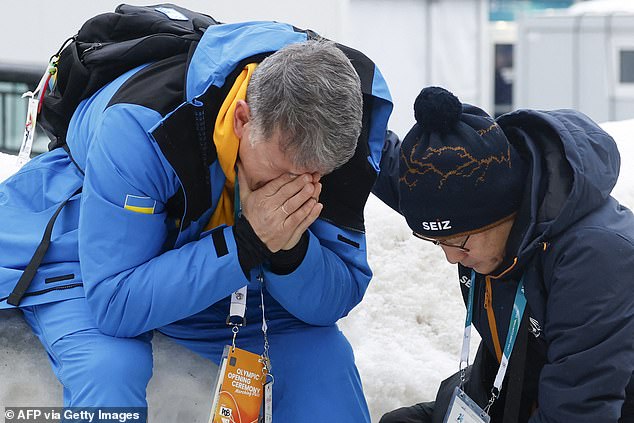
Heraskevych’s father Mykhailo reacts to the news his son has been disqualified
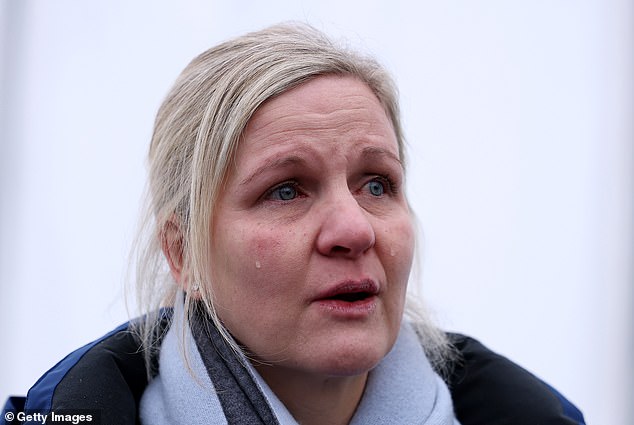
IOC president Kirsty Coventry breaks down in tears in front of the media after failing in her last-ditch attempt to persuade Heraskevych not to use the helmet
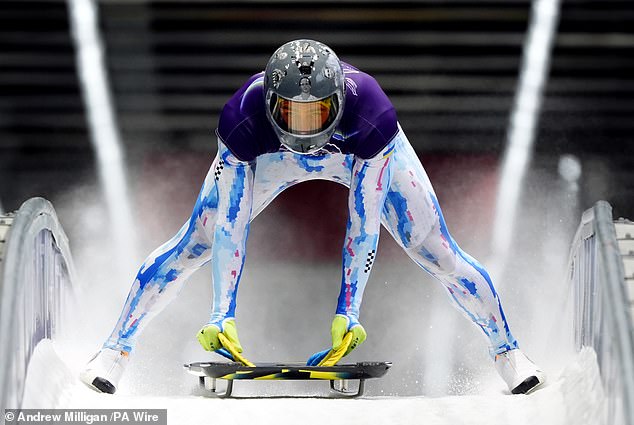
Heraskevych was allowed to use the helmet during training runs but has been banned from wearing it during the competition
The IOC have changed leadership since then, from Thomas Bach to the considerably more palatable Kirsty Coventry, but even the new regime has been conspicuous in softening its stance on Russia at these Games.
There are 13 Russians and seven Belarussians competing as ‘neutrals’ here and all indications are that the wider ban will be lifted in time for Los Angeles in 2028. To many, including the influential advocacy group, Global Athlete, that is woefully inadequate. They wrote an open letter on Monday under the headline: ‘The International Olympic Committee and International Federations Continue to Kowtow to Russia.’
The gist of their call to arms was that Russians should not be allowed back until the war ends. Most can see a lot of validity in that sentiment, and yet it is a Ukrainian skeleton pilot who has been deemed to have fallen out of line. It is a horrible look, only made possible because the Olympics wishes to maintain the façade that their gathering can rise above the world’s problems.
At best, it is a noble aspiration, and the tears of Coventry on Thursday proved this was no easy dilemma to solve. But at worst it is desperately naïve, with the upshot that the Olympics have come down hard on a skeleton racer representing a nation that is still under fire from the tyrant next door. Pick the bones out of that shambles.